"Is it safe for a woman alone?" is the question behind every solo trip a woman plans — and the honest answer is that some countries make it dramatically easier than others. The 10 destinations below combine low crime, reliable transport, and cultures where a woman eating dinner alone raises exactly zero eyebrows. For each one, you'll find why it feels safe on the ground, what it costs per day, and one tip that makes it even smoother.
1. Japan
Lost wallets get returned, streets feel safe at midnight, and harassment of tourists is rare. Some train lines even offer women-only cars during rush hour, and staff go out of their way to help lost travelers. Budget $90–120 a day. Book a night in a women-only capsule hotel floor in Tokyo — an experience in itself. Our Japan itinerary maps out an easy first route.
Stick to well-connected bases like Shinjuku, Shibuya, or Asakusa, where streets stay populated late and the last trains run past midnight. Konbini on every corner double as bright, staffed waypoints open around the clock — if a walk ever feels off, step into one and reset. Taxis are pricey (about $6 at flag fall) but spotless and honest, and station staff will walk you to the right platform if you show them your phone screen.
2. Iceland
Iceland has topped the Global Peace Index for over a decade, and violent crime is nearly nonexistent. Solo hikers and road-trippers are everywhere, so you'll blend right in. The real hazards are weather and one-lane bridges, not people. It's pricey ($150–200 a day), but group day tours from Reykjavik make solo logistics effortless.
Reykjavik's compact center means most hostels — dorms $40–55, private rooms about $110 — sit within a ten-minute walk of the tour pickups for the Golden Circle and south coast ($80–150 per tour). Solo drivers should check road.is each morning and file a travel plan through the SafeTravel Iceland app, which lets rescue services see your route if weather turns. Even at 1am, downtown Reykjavik feels calmer than most cities at noon.
READ MORE: 10 Best Solo Travel Destinations
3. New Zealand
Kiwis are famously friendly, hitchhiking still happens, and the backpacker infrastructure — hostels, buses, well-marked trails — is built for people traveling alone. Register longer hikes with a friend via the outdoor intentions system, and budget $100–130 a day. Queenstown and Wanaka are full of solo travelers year-round.
Lean on the outdoors safety net that locals built: log longer hikes on the free AdventureSmart trip-planner, rent a personal locator beacon ($8–12 a day from DOC visitor centres) for remote tracks, and book Great Walk huts well ahead. In Queenstown, lakefront hostels run $25–35 and fill with people traveling exactly like you; the Milford Sound day trip from town costs $100–150 with lunch and photo stops included.
4. Portugal
Western Europe's friendliest budget option, with mild catcalling culture compared to some neighbors and a very visible police presence in tourist areas. Lisbon's trams, Porto's riverside, and the Algarve's beach towns all feel comfortable after dark in busy areas. Expect $70–90 a day, with hostels that are social without being party-crazed.
Lisbon's Alfama and Baixa districts stay lively into the evening, and the metro is clean and simple at about $1.80 a ride — just keep your phone zipped away on tram 28, the pickpockets' favorite route in the country. In Porto, the Ribeira riverside buzzes until late and the Bolhao market area makes a fine daytime wander. The Sintra day trip ($5 by train from Rossio station) is easy and popular enough that you'll never feel alone doing it.
5. Slovenia
Tiny, green, and wildly underrated, Slovenia pairs alpine lakes with one of Europe's lowest crime rates. Ljubljana's car-free center is calm at night, and Lake Bled and Bohinj are easy solo day trips by bus ($5–10). Around $70–90 a day. It's also a gentle introduction to the Balkans if you plan to travel onward.
Base near Ljubljana's Preseren Square and you can walk everything that matters: the castle funicular with entry costs about $18, and riverside restaurants serve dinner for $12–18 within sight of the Triple Bridge. Buses to Lake Bled leave roughly hourly from the main station ($8, 80 minutes), and once there, the six-kilometer lakeside loop is flat, busy, and lovely to walk alone. English is near-universal among younger Slovenians, which flattens every small logistics bump.
READ MORE: 10 Travel Mistakes Everyone Makes (Avoid These)
6. Singapore
Immaculate, strict, and safe at any hour, Singapore is ideal for a first solo trip to Asia. The MRT is spotless and runs late, tap water is drinkable, and English is an official language. It's compact enough to explore confidently in three days. Street food keeps costs sane — Michelin-listed hawker meals for $4–6 — though hotels push budgets to $120–150 a day.
Stay near an MRT interchange like Bugis, Chinatown, or Clarke Quay and the whole city opens up for $1–2 a ride on an EZ-Link card. Hawker centres — Maxwell, Lau Pa Sat, Old Airport Road — are brightly lit, packed until late, and built for solo dining at any hour. Even the free Gardens by the Bay light shows at 7:45pm and 8:45pm come with a crowd of hundreds, and the walk back to the MRT stays busy the whole way.
7. Switzerland
Trains run like clockwork to even the tiniest mountain villages, and solo hiking is a national pastime — trails are so well marked you barely need a map. Violent crime is rare even in cities. It's the priciest entry here ($150–220 a day), so consider shoulder season (May–June, September) and grocery-store picnics with a view.
The Swiss Travel Pass ($250–300 for four days) covers trains, buses, boats, and most museums, which removes every logistics decision at once. Base in Interlaken or the village of Lauterbrunnen for the Jungfrau region — hostels run $50–70 — and pick well-trodden classics like the Mannlichen to Kleine Scheidegg panorama walk, where you're never out of sight of other hikers or a railway station. Coop and Migros supermarkets turn $12 into a mountain picnic that outclasses most restaurants.
8. Ireland
The craic is real: strike up a conversation in any pub and you'll leave with three new friends and a list of local tips. Dublin, Galway, and the Wild Atlantic Way are well-touristed and welcoming, and organized day tours cover the Cliffs of Moher ($55–70) if you'd rather not drive on the left. Budget $100–130 a day.
Galway makes the best solo base: everything is walkable, live music starts around 9:30pm in the pubs along Quay Street, and sitting at the bar alone is simply how it's done — expect conversation within one song. Day tours to the Cliffs of Moher and Connemara leave the city centre every morning. In Dublin, hostels run $35–50, a pint is about $7, and the free National Gallery and National Museum fill rainy afternoons beautifully.
9. Denmark
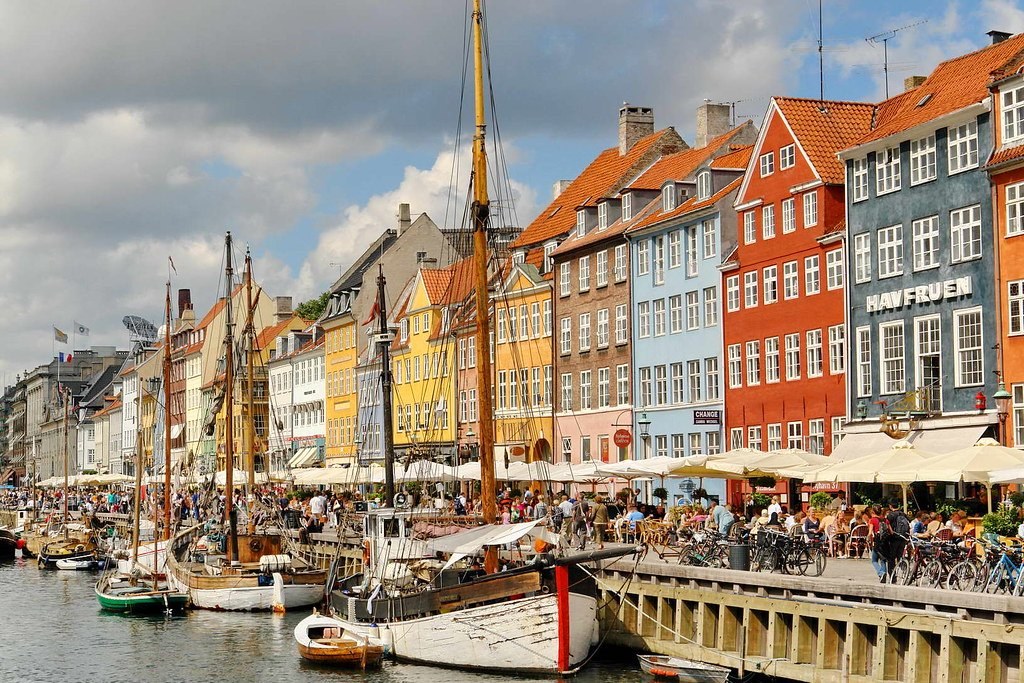
Copenhagen regularly ranks among the world's safest capitals, and cycling culture means streets stay busy and well lit late into the evening. Rent a bike ($15 a day) and you'll travel exactly like a local. At $130–160 a day it isn't cheap, but hostel-hotel hybrids and smørrebrød lunch spots soften the blow.
Copenhagen's most comfortable solo bases are Vesterbro and Norrebro, where cafes and constant cycle traffic keep streets alive well past dinner. A City Pass covers metro, buses, and the airport train from about $12 a day, and the free harbour bath at Islands Brygge is a lifeguarded local ritual all summer. Eat your big meal at lunch: smørrebrød runs $10–15 at midday from the same kitchens that charge double at dinner.
10. Taiwan
Taiwan combines Japan-level safety with Southeast Asia-level prices — a rare mix. Night markets buzz until midnight and feel completely comfortable to wander alone, metro stations have well-lit waiting zones, and locals will walk you to your destination if you look lost. Beef noodle soup costs $3–4, and $60–80 a day travels well here.
Taipei's metro runs until midnight with camera-monitored waiting zones marked on every platform, and an EasyCard makes each ride $0.60–1. Base near Ximending or Da'an for walkable evenings, then graze the Raohe or Ningxia night markets, where a full dinner of dumplings, scallion pancakes, and papaya milk costs $5–8. When you're ready to roam, the high-speed rail reaches Tainan or Kaohsiung in under two hours ($40–45), turning the whole island into an easy solo loop.
Safety is a skill, not a location
The safest country in the world can't replace good habits — and good habits let you go far beyond this list. Start with one of these ten, learn how you travel, then expand your map one country at a time. Millions of women travel solo every year and come home with stories, not horror stories — the statistics are far kinder than the headlines. When you're ready to choose, our roundup of the best solo travel destinations pairs perfectly with this list, and a smart packing list (crossbody bag, doorstop alarm, backup card in a second pocket) does more for your safety than any statistic.
A practical way to build the skill: give yourself a shakedown trip of three or four days somewhere on this list before committing to a month-long adventure. Test your packing, your instincts, and your daily budget — most travelers discover they need less of everything except confidence. Then, on the flight home, write down what worked and what you'd change; that five-minute list becomes the backbone of every bigger trip that follows it.
How to vet accommodation before you book
Where you sleep sets your safety baseline, and reviews tell you almost everything if you read them right. Filter for reviews written by solo women — most booking platforms let you sort by traveler type — and scan for three specifics: how the neighborhood feels after dark, whether reception is staffed 24 hours, and how the walk from the metro or bus stop is described. A perfect 9.5 rating paired with "a bit far from everything" can be a worse choice than an 8.5 in the middle of a busy, well-lit district. Female-only dorms are worth the $3–5 premium in party cities, and in guesthouses, a room above the ground floor with a solid deadbolt beats a charming garden bungalow with a latch. Our accommodation guide breaks down which booking platforms surface the filters that matter.
Scripts for unwanted attention
Most uncomfortable moments dissolve with a firm, boring response delivered while you keep moving. A few that work across cultures: "No, thank you," repeated identically with zero added explanation, outlasts almost any persistent stranger. "My husband is meeting me" requires no ring and no husband. In a taxi that feels wrong, "Stop here, please — this is my street" gets you out at the next busy corner without negotiation. On overnight trains and buses, headphones in (sound off) end conversations you don't want while letting you stay alert. And the nuclear option costs nothing: step into any hotel lobby, pharmacy, or busy shop and the situation resets. You never owe a stranger a conversation, an explanation, or a smile — politeness is optional equipment abroad, exactly as it is at home.
Tech that quietly has your back
A little setup before you fly turns your phone into a safety net. Share your live location with one person at home through Google Maps or Find My — it runs for weeks and needs no check-ins. Download offline maps for every city plus the local language pack, so a dead signal never strands you. Save your accommodation's address as a screenshot in the local script for taxi drivers. An eSIM ($10–30 for 5–10GB) means you land connected instead of hunting airport Wi-Fi with your luggage in tow. Finally, set up your phone's emergency SOS shortcut — five presses of the power button on most models — and learn the local emergency number: 110 in Japan, 112 across Europe, 111 in New Zealand.
Frequently asked questions
Is it safe to go out alone at night?
In the ten countries above, generally yes in busy districts — dinner alone at 9pm in Tokyo, Copenhagen, or Ljubljana is completely unremarkable. The universal rules still apply: know your route home before you leave, keep your drink in sight, and take a licensed taxi or rideshare after midnight rather than a long walk through empty streets.
Should I post my location on social media?
Post on a delay. Sharing where you were yesterday keeps the highlight reel intact without broadcasting where you're sleeping tonight. Save real-time location sharing for one trusted person, not two thousand followers.
What if my accommodation feels wrong when I arrive?
Leave. Booking platforms refund more often than people expect when you cite safety concerns and message them immediately, and even eating the cost of one $30 night is the cheapest insurance you'll ever buy. Screenshot two nearby alternatives before you arrive so a bad first impression becomes a ten-minute detour, not a crisis.
What's the best first country if I'm nervous?
Japan or Iceland. Japan pairs near-zero street crime with unmatched public transport, and Iceland's tourism industry runs on group day tours where you're never actually alone. Both build confidence fast — and then the rest of the map opens up. Before any first trip, spend ten minutes with our list of travel mistakes everyone makes; half of them matter double when there's no travel partner to catch what you missed.