Five days in Thailand sounds tight, but it's exactly enough for the country's two great flavors: Bangkok's golden temples and legendary street food, then Krabi's limestone cliffs and turquoise water. Domestic flights are cheap and short, so you lose almost no time in transit. Here's the day-by-day plan, with the prices and boat schedules that make it work.
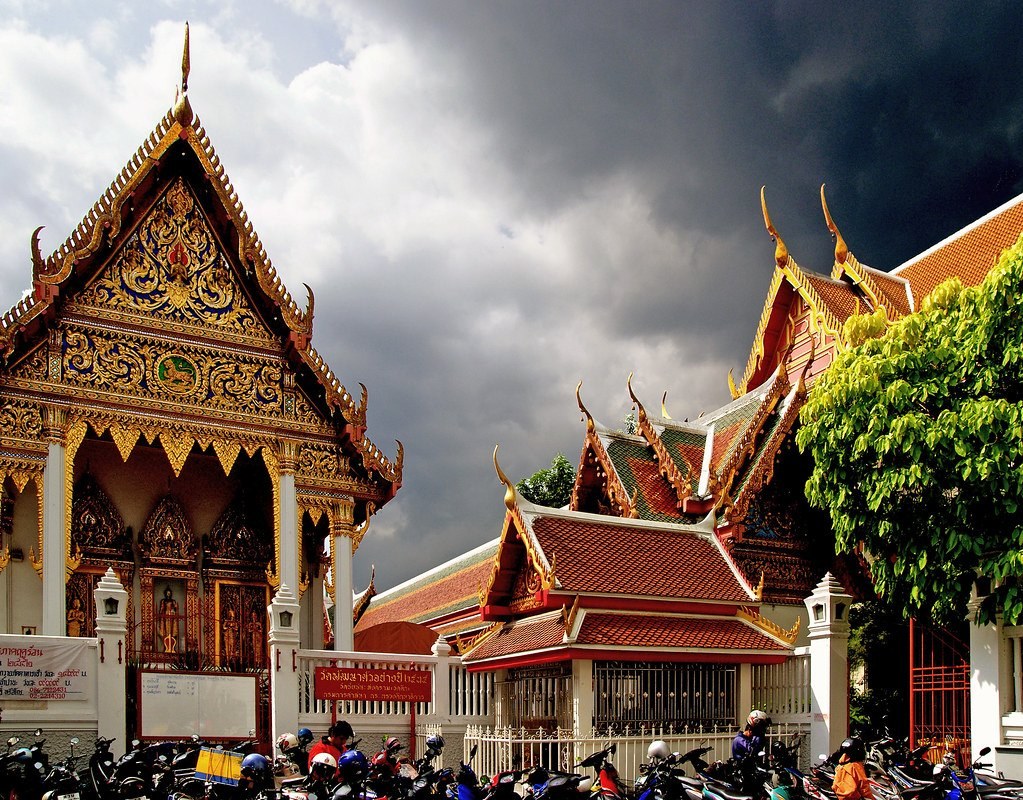
Day 1: Bangkok's Old City — Grand Palace, Wat Pho & Chinatown
Morning: the Grand Palace & Wat Phra Kaew
Be at the gates when they open at 8:30am — by 10 the heat and tour groups arrive together. The easiest approach is the Chao Phraya express boat up the river from Sathorn Pier (about $1, and the best commute in Bangkok). The Grand Palace complex (about $14) includes Wat Phra Kaew and the Emerald Buddha, Thailand's most sacred image. Dress code is strict: covered shoulders and knees, no leggings — and ignore anyone outside claiming the palace is "closed today"; it's the city's oldest scam.
Afternoon: Wat Pho & Wat Arun
Walk ten minutes to Wat Pho (about $9) to meet the 46-meter gold Reclining Buddha, then take the river shuttle across the Chao Phraya — it costs about 15 cents — to Wat Arun ($6), whose porcelain-studded spire you can climb partway for river views.
Evening: Yaowarat street food crawl
Bangkok's Chinatown at night is one of the world's great eating streets. Follow the queues: pad thai, grilled satay, and mango sticky rice run $1.50–3 a dish, and even the Michelin-listed stalls barely break $5.
Day 2: Markets, Massages & Rooftop Sunsets
Morning: Chatuchak or the flower market
On weekends, get lost in Chatuchak Market — 15,000 stalls of everything from vintage denim to coconut ice cream ($1). On weekdays, go early to Pak Khlong Talat flower market instead, then tour the silk-filled Jim Thompson House ($6).
Afternoon: a proper Thai massage
A one-hour traditional massage costs $8–12 at reputable shops — Wat Pho's own massage school is the classic choice. Refuel with boat noodles ($1.50 a bowl) near Victory Monument.
Evening: sunset from a sky bar
Bangkok's rooftops are surprisingly accessible: dress smart-casual and expect drinks around $10–15. For the same view at street prices, take the free shuttle to Asiatique night market by the river instead.
Jim Thompson House deserves its hour: the guided tour is included in the $6 ticket and leaves every 20 minutes, and the silk shop's small scarves ($20–30) are the best Bangkok gifts that fit in a daypack. The BTS stations at Siam and National Stadium anchor this whole day — no ride costs more than $1.50, and the air-conditioned walkways beat midday pavement by ten degrees.
Sky bar specifics save embarrassment: the rooftops around Silom and the river enforce a no-shorts, no-sandals dress code, so pack one smart-casual outfit. Arrive about 45 minutes before sunset — around 5:45pm most of the year — and you'll claim a rail-side spot without a reservation. If markets appeal more than $14 cocktails, Asiatique's free shuttle boat leaves Sathorn Pier every 15 minutes from 4pm, and dinner there still costs street prices at $3–6 a dish.
READ MORE: The Perfect 3-Day Bali Itinerary
Day 3: Fly South to Krabi — Railay's Limestone Cliffs
Morning: the flight south
Budget airlines fly Bangkok to Krabi in 80 minutes for $30–60 if you book a couple of weeks out — fly from Don Mueang for the cheapest fares. From Krabi airport, the shared shuttle van to Ao Nang costs about $4.50 and takes 40 minutes; base yourself there, the convenient beach-town hub for everything that follows.
Afternoon: longtail boat to Railay Beach
Railay is reachable only by sea — the shared longtail from Ao Nang costs about $4.50 each way and takes 15 minutes. Swim beneath the karst cliffs at Railay West, walk to Phra Nang Cave Beach, or try beginner rock climbing (half-day course about $30).
Evening: Ao Nang night market
Back on the mainland, dinner at the seafood stalls: grilled snapper with garlic and lime for $7–9, fresh fruit shakes for $1.50.
READ MORE: The Most Beautiful Islands in the World
Days 4–5: Island Time — Phi Phi & the Hong Islands
Day 4: Phi Phi Islands boat tour
Day tours from Ao Nang ($35–45, including lunch and the $11 national park fee) hit the highlights: Maya Bay's movie-famous cove, snorkeling over reefs at Pileh Lagoon, and monkeys at — where else — Monkey Beach. Book a speedboat rather than a big ferry, and choose the 7am "early bird" departure: you'll reach Maya Bay before the flotilla from Phuket and get an extra hour in the water.
Day 5: the Hong Islands, then home
For your last morning, the quieter Hong Islands tour ($30–40) delivers a hidden lagoon ringed by 100-meter cliffs and a sandbar you can wade between islands at low tide. Evening flights back to Bangkok connect easily with international departures — leave three hours of buffer.
Bring more cash than the tour price: national park fees are sometimes collected separately on the beach, snorkel-gear deposits run a few dollars, and the vendors at Maya Bay operate strictly card-free. Seasickness tablets from any Ao Nang pharmacy cost about $1 and turn a bouncy speedboat crossing into a nap, and the $3 waterproof phone pouches sold on every corner earn their keep — boat spray is not negotiable. Back on land, a post-swim massage runs $8–10, and confirming your $4.50 airport shuttle the evening before removes the last logistics worry of the trip.
What do 5 days in Thailand cost?
- Budget: $35–50/day — guesthouses, street food feasts, shared boats and public transport.
- Mid-range: $70–120/day — pool hotels in both cities, private tours, a rooftop night out.
- Splurge: $200+/day — a Railay resort, private longtail charters, and spa days on repeat.
Thailand is one of the easiest places on earth to travel well for less — it stars in our guides to traveling on $30 a day and the cheapest countries to visit. And if the islands steal your heart, there are plenty more in our roundup of the world's most beautiful islands.
A worked mid-range budget for the five days: $45 a night on hotels ($225), $60 for round-trip domestic flights booked two weeks out, $85 for the two island tours, $30 on transfers and boats, and $25 a day on food and drink ($125) — about $525 on the ground before your international flight. The same trip in guesthouses with street-food dinners and one island tour instead of two lands nearer $300.
Where the money hides: the Grand Palace is Thailand's priciest single ticket at $14, so budget-focused travelers sometimes swap it for Wat Suthat and the Giant Swing (free to $3) and put the difference toward a second massage. Happy hours in Ao Nang run 4–7pm with big bottles of Chang at $1.50–2, and 7-Eleven's absurdly beloved toasties, about $1 each, patch every gap between proper meals.
Common first-timer mistakes in Thailand
- Renting a scooter without a motorcycle license. Your travel insurance is void without one, and Thai hospital bills are real. In Ao Nang, songthaews (shared pickup trucks) cover the same ground for $1–2 a hop.
- Taking the first tuk-tuk price. Agree the fare before you climb in — and know that in Bangkok, a metered taxi or Grab is usually cheaper than a negotiated tuk-tuk. You're paying for the experience, which is fair exactly once.
- Handling Buddha images casually. Never climb on statues or pose disrespectfully for photos. It genuinely offends, and at some sites it's a police matter.
- Drinking tap water. Bottled water is 30 cents. Ice from commercial suppliers (the cylindrical kind with holes) is fine, and so is street food from busy stalls — turnover is your friend.
- Booking island tours from Bangkok. Wait until Ao Nang, where every second storefront sells the same Phi Phi and Hong trips for less and will reschedule you free if the sea turns rough.
What to eat and what it should cost
Thai food is the trip within the trip, and prices tell you where locals eat. A plate of pad krapow — holy basil stir-fry over rice with a crispy egg — should cost $1.50–2.50 at a street stall; som tam, boat noodles, and khao man gai sit in the same range. Seafood scales by weight: expect $7–10 for a whole grilled fish at a night market, and double that for the same fish at a beachfront table. Fruit shakes are $1–1.50, Thai iced tea about $1, and proper mango sticky rice $2–3. If a laminated picture menu quotes $6 for pad thai, you're paying the view tax. Order wherever you see a queue of locals and a wok over serious flame — the full strategy lives in our guide to Asia's best cheap street food.
What to pack for this itinerary
Light, quick-drying, and temple-ready. Bring breathable clothes you can rinse in a sink, plus one set that covers shoulders and knees for the Grand Palace and Wat Pho — a light scarf or sarong solves most dress-code moments on the spot. Add reef-safe sunscreen (island tour boats sell it at triple price), a dry bag for longtail crossings ($10–15 in any Ao Nang shop, cheaper at home), sandals you can swim in, mosquito repellent for dusk, and a packable rain shell if you're traveling May through October. Leave room in the bag — Chatuchak and the night markets will fill it. A universal adapter, basic meds, and paper copies of your passport round out the kit.
Two Thailand-specific additions earn their space: a light long-sleeve layer for the ferocious air conditioning in malls, airports, and buses, and a small padlock for guesthouse lockers and day bags on boats. Leave the heavy jeans and the hair dryer at home — laundry shops in Ao Nang wash and fold a kilo for about $1.50 with same-day service, which is exactly how five days of clothes fits into a carry-on with room for market finds.
Frequently asked questions
How does tipping work in Thailand?
It's appreciated, never demanded. Round up at street stalls, leave 20–50 baht ($0.60–1.50) at casual restaurants, and tip massage therapists 50–100 baht directly — they typically receive only a fraction of the shop price.
What's the cheapest way to get cash?
Thai ATMs charge a flat 220-baht fee (about $6.50) per withdrawal regardless of your home bank, so make one or two large withdrawals instead of five small ones. Downtown Bangkok exchange booths beat airport counters comfortably if you're carrying dollars.
Is five days enough, or should I stretch it?
Five days covers Bangkok and Krabi honestly. With eight to ten, add Chiang Mai for temples, khao soi, and an ethical elephant sanctuary day ($70–80 for outfits that ban riding). Thailand rewards slow travel more than almost anywhere — our Thailand budget guide shows how far $40 a day still goes.
Do I need a SIM card?
Yes — Grab, boat schedules, and translation all need data, and it's absurdly cheap. Tourist eSIMs from AIS or True cost $10–15 for 15–30GB and activate before you land, or the airport counters will set up a physical SIM in five minutes. Coverage is excellent everywhere on this route, including the boats.
What happens if the sea is too rough for island tours?
Operators cancel rather than risk it, and reputable ones refund in full or rebook you free — one more reason to book in Ao Nang instead of online. Keep days four and five flexible in monsoon season, and if a tour does cancel, Krabi Town's night market and the Tiger Cave Temple's 1,237-step viewpoint make an excellent plan B.
Is Bangkok safe at night?
Yes, by big-city standards — violent crime against tourists is rare. The real risks are traffic, drink-spiking in party districts, and inflated bar bills. Keep your own drink in hand, agree prices first, and take Grab rather than flagging cars late at night.