Route 1 — the Ring Road — loops 1,332 km (828 miles) around Iceland, and seven days is the minimum that lets you actually stop for the waterfalls, black beaches, and glacier lagoons instead of watching them blur past. This guide runs counterclockwise from Reykjavík, front-loading the famous south coast so the wild, quiet north feels like a reward. Expect 2–4 hours of driving most days.
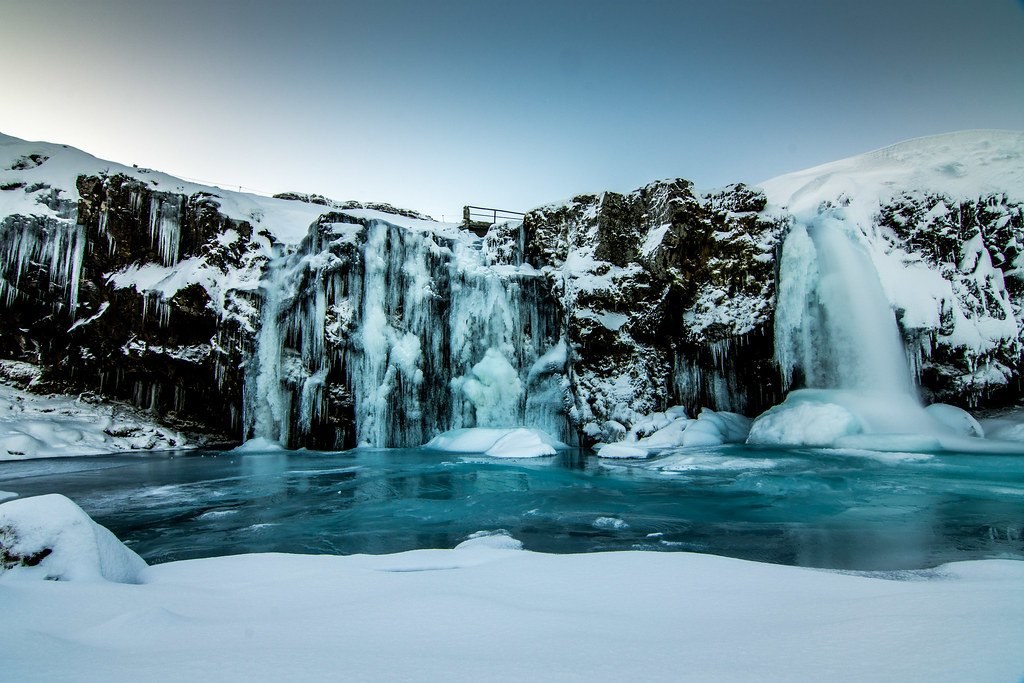
Day 1: The Golden Circle
Morning: Þingvellir National Park
Walk the rift valley where the North American and Eurasian tectonic plates pull apart — and where Vikings held the world's first parliament in 930 AD. Entry is free (parking about $7).
Afternoon: Geysir & Gullfoss
Strokkur erupts 20 meters high every 6–10 minutes, so you're guaranteed the shot. Twenty minutes on, Gullfoss thunders down its two-tiered canyon. Both are free — Iceland's best sights usually are.
Evening: soak at the Secret Lagoon
Finish in the village of Flúðir at Iceland's oldest pool (about $25), a steamy, unpretentious alternative to the Blue Lagoon. Overnight near Selfoss or Hella.
Beat the tour-bus wave by timing, not luck: coaches from Reykjavík hit Þingvellir around 10am and Geysir near noon, so an 8am start keeps you one stop ahead all day. Food options are thin out here — note Friðheimar's tomato-greenhouse restaurant near Reykholt (the famous soup buffet runs about $22) and the farm-made rye-bread ice cream at Efstidalur ($6). Driving totals only about 230 km today, the gentlest day of the whole loop.
Day 2: The South Coast — Waterfalls & Black Sand
Morning: Seljalandsfoss & Skógafoss
You can walk behind Seljalandsfoss (bring a rain shell; parking $7), then stand at the base of 60-meter Skógafoss, which throws double rainbows on sunny mornings. Climb the 527 steps beside it if your legs allow.
Afternoon: Reynisfjara black sand beach
Basalt columns, roaring surf, and sea stacks straight out of a saga. Respect the sneaker-wave warning signs — they are not decorative. The Dyrhólaey arch viewpoint next door is a favorite puffin spot from May to August.
Evening: Vík
Iceland's southernmost village, framed by its red-roofed church. Overnight here; dinner mains run $25–35 pretty much everywhere in rural Iceland.
Two worthwhile add-ons hide beside the famous stops: the DC-3 plane wreck walk at Sólheimasandur (free, 45 minutes each way across black gravel flats) and the Skógar folk museum ($15) if the weather turns on you. Fill the tank whenever you pass Hvolsvöllur or Vík — stations thin out east of here — and book Vík beds earlier than anything else on the trip; the village has far more visitors than rooms most of the year.
READ MORE: How to See the Northern Lights: A Complete Guide
Day 3: Canyons, Glaciers & the Lagoon of Icebergs
Morning: Fjaðrárgljúfur canyon
A 100-meter-deep, moss-green serpentine canyon 40 minutes east of Vík — the short rim trail takes an hour and looks unreal in every photo.
Afternoon: Skaftafell, Vatnajökull National Park
Hike 1.5 hours round trip to Svartifoss, the waterfall framed by hexagonal basalt organ pipes, or join a guided glacier walk on Vatnajökull's tongues (about $110, crampons included).
Evening: Jökulsárlón & Diamond Beach
Icebergs calve off the glacier and drift across Jökulsárlón lagoon before washing up like crystal sculptures on the black sand of Diamond Beach. Both free, endlessly photogenic. Overnight in Höfn — order the langoustine.
Timing notes for the lagoon: seals cruise among the icebergs year-round, and the light turns golden in early evening once the Reykjavík day-trippers have turned back west. Zodiac and amphibian boat tours run May to October ($35–60) if you want to float between the bergs rather than photograph them from shore. Today is the itinerary's longest drive at about 270 km, so leave Vík by 9am and treat Fjaðrárgljúfur as a leg stretch, not a hike.
Day 4: The East Fjords
Morning: the slow, spectacular drive
Route 1 threads fjord after fjord — reindeer graze the slopes and every bend earns a photo stop. Stretch your legs in tiny Djúpivogur.
Afternoon: Seyðisfjörður
Detour over the mountain pass to Iceland's prettiest town: a rainbow-painted street leading to a powder-blue church, ringed by 1,000-meter walls. Coffee and cake in an artist-run café, about $10.
Evening: Egilsstaðir
Overnight in the east's hub town. In late August through April, this dark, clear stretch of Iceland is superb for aurora hunting — our northern lights guide covers exactly how to find them.
The Seyðisfjörður detour adds 54 km round trip over a paved mountain pass that's dramatic in sun and occasionally fog-bound in shoulder season — check conditions before committing. Refuel in Egilsstaðir, where dinner clusters around $18–22 lamb soup and burgers. If waterfalls still call, Hengifoss — Iceland's third highest, striped with bands of red clay — sits a 40-minute drive south, then a one-hour uphill walk from its car park, and rarely draws a crowd.
Day 5: North Iceland — Dettifoss, Mývatn & Goðafoss
Morning: Dettifoss
Europe's most powerful waterfall dumps 193 cubic meters of glacial grey water per second into a canyon you feel in your chest. The paved west-side road (862) is the reliable approach.
Afternoon: the Mývatn area
Walk among boiling mud pots at Hverir, explore the lava labyrinth of Dimmuborgir, then soak in the milky-blue Mývatn Nature Baths (about $48) — Blue Lagoon views at half the price and a tenth of the crowd.
Evening: Goðafoss & Akureyri
Stop at horseshoe-shaped Goðafoss, the "waterfall of the gods," on the way into Akureyri, Iceland's cheerful northern capital — even its traffic lights are heart-shaped.
Akureyri makes the best overnight of the north: guesthouses run $90–130, the botanical garden is free, and the town pool ($9) has hot pots that locals genuinely use as their living room. One regional quirk to know — tiny midges swarm the Mývatn area on calm summer days, and the $5 head nets sold at every N1 station are the north's best purchase. Dettifoss to Akureyri covers about 160 km, with every stop above sitting close to the road.
READ MORE: Hidden Gems in Europe Worth the Detour
Days 6–7: West to Snæfellsnes & Back to Reykjavík
Day 6: whales, horses & the long drive west
Morning option: a whale-watching tour from Húsavík or Akureyri (about $95, humpbacks almost guaranteed in summer). Then cruise the quiet northwest, meeting Icelandic horses at fence lines, to overnight near Borgarnes.
Day 7: the Snæfellsnes Peninsula finale
"Iceland in miniature": photograph Kirkjufell, the country's most famous mountain, walk the cliffs between Arnarstapi and Hellnar, then drive two hours back to Reykjavík. Cap the trip at Sky Lagoon (about $65), soaking in an infinity edge over the Atlantic.
Two booking notes for the finale: Húsavík's whale boats fill a day or two ahead in July and August, so reserve as soon as your day-five weather looks clear, and Sky Lagoon's sunset slots sell out first — book those the week you land in Iceland. On Snæfellsnes, the Vatnshellir lava cave tour ($30, 45 minutes underground) is an easy add, and Kirkjufell photographs best from the small waterfall car park just south of the mountain, where the falls stack into the foreground.
What does the Ring Road cost?
- Budget: $110–160/day — campervan split between two, grocery-store meals, free waterfalls, one splurge soak.
- Mid-range: $200–300/day — guesthouses with breakfast, a rental car, one big tour (glacier walk or whales), restaurant dinners.
- Splurge: $450+/day — design hotels, super-jeep tours, and a private lagoon experience to finish.
Iceland is never cheap, but it's controllable: our budget travel hacks apply beautifully here, and packing right matters more than anywhere — layers, waterproofs, and swimwear all make our 40-item packing list for a reason.
A worked mid-range week for two: $600 for the rental car with gravel insurance, $280 in fuel, $900 for six guesthouse nights, $350 on food mixing groceries with four restaurant meals, plus a $110 glacier walk, $48 Mývatn baths, and $65 Sky Lagoon — about $1,200 per person before flights. Campervan couples routinely bring the same loop under $800 each by folding the room and half the restaurant bills into the van.
Driving mistakes that catch first-timers
- Stopping on the road for photos. Route 1 has no shoulder in most places, and locals crest hills at 90 km/h. Use the frequent pull-outs — no view is worth a rear-ending.
- Ignoring the wind when opening doors. Gusts rip car doors backward hard enough to bend hinges, and door damage is excluded from most rental policies. Hold the door with both hands and park nose into the wind.
- Taking a 2WD onto F-roads. The mountain interior routes are 4x4-only by law, and attempting one in a 2WD voids your insurance completely. Everything in this itinerary stays on legal roads.
- Speeding through camera zones. Fixed cameras around Reykjavík and the Hvalfjörður tunnel issue fines of $150–400 that follow your rental card home. The limit is 90 km/h on paved rural roads, and everyone means it.
- Declining gravel protection. Windshield chips are Iceland's most common rental claim. The gravel insurance ($10–15 a day) is the one add-on that reliably earns its keep.
How to eat well without going broke
Iceland's restaurant prices are the stuff of legend — $25 soup exists — but the workarounds are painless. Shop at Bónus or Krónan (skip the convenience chains, priced at triple), and cook where you sleep: nearly every guesthouse and campsite has a kitchen. The famous gas-station hot dog, a genuine national dish, costs about $5 — order it "með öllu," with everything. Lunch soup buffets with unlimited refills and bread run $15–20 and quietly double as dinner insurance. Tap water is glacial, delicious, and free everywhere, so never buy a bottle, and skip tipping entirely — it isn't done. Do budget one seafood splurge: the langoustine in Höfn ($40–50) and the fish stew in small harbor towns justify the whole system of savings around them.
Where to sleep along the loop
Accommodation is the Ring Road's real bottleneck: the south coast between Vík and Höfn has far more demand than beds, so book June–August nights two to three months out. Guesthouses with shared bathrooms run $90–140 a double, farm stays add sheep and serious breakfasts for similar money, and hostels in Vík, Höfn, and Akureyri offer dorm beds at $40–55. Campers have it easiest — sites cost $15–20 per person and rarely fill completely — but note that sleeping in vehicles outside official campsites is illegal in Iceland. The strategic move: lock in the south coast first and leave the east and north flexible, where beds outnumber travelers even in July. Our cheap accommodation guide has more ways to keep room costs sane.
Frequently asked questions
Do I need any Icelandic króna in cash?
Realistically, no. Iceland is nearly cashless — cards and phones pay for everything from campsites to hot dog stands, including unattended parking machines. Just carry a card with a PIN for self-service gas pumps, which demand one.
Will I see the northern lights on this trip?
From late August through mid-April, you have a real chance on any clear, dark night — the east fjords and the Mývatn stretch of this route are superb for it. Check the aurora forecast each evening and be willing to lose an hour of sleep. June and July are bright around the clock, so summer drivers trade this hope for midnight sun hikes.
Should I drive the loop clockwise instead?
You can — the itinerary reverses cleanly. Counterclockwise front-loads the south coast's icons while your energy is high; clockwise saves them for a finale and suits late-arriving flights that want a gentle first day. Let weather decide: check the forecast and drive toward the clearer half of the country first.
What about alcohol?
Buy it at Keflavík airport duty-free on arrival, like the locals do. The state Vínbúðin stores charge two to three times more and keep short hours, and grocery stores sell only near-beer. A bottle of wine that costs $12 at duty-free is $30 or more in town.
Is the Blue Lagoon worth adding?
At $70–90 for basic entry, it's a beautiful, crowded machine — and this route already gives you better-value soaks: the Secret Lagoon on day one, Mývatn Nature Baths on day five, and Sky Lagoon as the finale. If you still want it, book it for the drive to or from Keflavík airport, which it sits conveniently beside, rather than burning Ring Road hours on a detour.
Do I need a special license to drive here?
No — any valid license printed in Latin characters works, and rental desks ask for nothing more. Drivers under 25 should budget for a young-driver surcharge of $10–15 a day, and headlights must stay on around the clock; it's the law, and the rental car usually handles it automatically.