Some places just photograph like a dream — the light, the colors, the backdrops that make strangers stop scrolling. These ten are the most Instagrammable places in the world right now, with the exact spot to stand, the hour to show up, and what it'll cost you to get the shot everyone asks about.
1. Oia, Santorini, Greece
Blue domes, white walls, pink bougainvillea — the holy trinity of travel Instagram. The famous three-dome shot is from the small terrace near the Church of Panagia; go at 7am when the lanes are empty and the light is soft gold. Everything else you need is in our Santorini travel guide.
Base yourself in Firostefani or Imerovigli instead of Oia itself — caldera-view rooms run $150–200 versus Oia's $350-plus, and the sunset from Skaros Rock is arguably better and far less crowded. The local bus from Fira to Oia costs about $2 and runs every 20–30 minutes; take the first one of the morning and you'll beat the cruise crowds by two full hours.
2. Cappadocia, Turkey
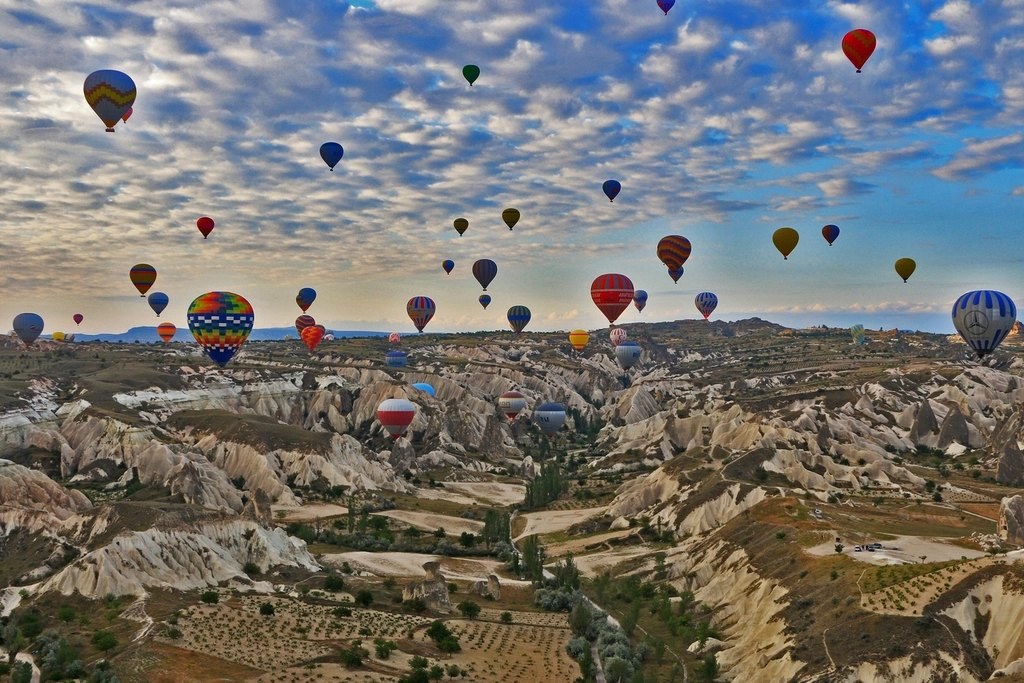
A hundred hot-air balloons drifting over honey-colored fairy chimneys at sunrise. Watch free from the rooftop terraces of Göreme's cave hotels, or fly for $180–250. Book a hotel with a famous terrace (Sultan Cave Suites, Mithra) months ahead — balloon season is best April–October when winds are calm.
Flights are the easy part: Turkish Airlines and Pegasus fly from Istanbul to Kayseri or Nevsehir for $40–60, and hotel shuttles cover the last hour. Balloons launch at dawn and get canceled by wind roughly one morning in four, so give yourself three nights as insurance. Between flights, walk the free Love Valley and Rose Valley trails — sunset from Göreme's Sunset Point costs about $1.50.
READ MORE: Santorini Travel Guide: Everything You Need to Know
3. Ubud & East Bali, Indonesia
The Gates of Heaven at Lempuyang Temple, the jungle swings over Tegallalang's rice terraces ($10–35 a ride), and waterfalls like Kanto Lampo made Bali the most tagged island on Instagram. Reality check: lines at Lempuyang start early — arrive before 7am. Route it all efficiently with our Bali itinerary.
Hire a private driver for the east-Bali loop — about $50–60 for a 12-hour day, split between friends — because Lempuyang, Tirta Gangga, and Tukad Cepung waterfall line up neatly along one road. At Tirta Gangga, $3 gets you the koi-pond stepping stones with a fraction of Lempuyang's queue. Carry small bills for sarong rentals ($1–2) and waterfall entry fees ($2–3 each).
4. Paris, France (Trocadéro at sunrise)
The Eiffel Tower from the Trocadéro esplanade at dawn is the most reliable "wow" frame in Europe — and at 7am you'll share it with three joggers instead of three hundred tourists. For a second angle, head to the carousel at Pont d'Iéna or the cobbled Rue de l'Université. A fresh croissant prop costs $2.
Skip the tower queue entirely and spend that money on the Arc de Triomphe rooftop instead ($14) — it's the one terrace where the Eiffel Tower actually appears in your skyline shot. On summer evenings the tower sparkles for five minutes on the hour after dark; set up on the Bir-Hakeim bridge by 9:45pm for the frame through the iron arches.
5. Fushimi Inari Shrine, Kyoto, Japan
Ten thousand vermilion torii gates tunneling up a forested mountain — free, open 24 hours, and otherworldly. The crowds thin dramatically past the first ten minutes of gates; the upper loop after Yotsutsuji intersection is often empty even at midday. Go at dusk when the lanterns glow for the moodiest frames.
It's four stops from Kyoto Station on the JR Nara Line — about $1.50 and five minutes, faster than any taxi. Budget two hours for the full summit loop and stop for kitsune udon (about $6) at one of the mountain teahouses halfway up. If you're stringing Kyoto together with Nara and Tokyo, the timing math is already worked out in our Japan itinerary.
READ MORE: The Perfect Bali Itinerary
6. Chefchaouen, Morocco
An entire hillside town painted fifty shades of powder blue, tucked into the Rif Mountains. Every staircase is a set. The famous flower-pot lane near Callejon El Asri gets busy by 10am, so shoot early, then refuel with $1 mint tea on Plaza Uta el-Hammam. It's a 2.5-hour shared taxi from Tangier (about $10).
Sleep inside the medina at a riad like Casa Perleta or Lina Ryad ($40–70 a night) so you can be out shooting at 7am in your slippers. The other frame worth the effort: the Spanish Mosque on the hill east of town, a free 25-minute walk up, where the entire blue city glows at sunset. Friday mornings are quietest, since much of town is at prayer.
7. Skógafoss, Iceland
A 60-meter curtain of water you can walk right up to — rainbows appear most sunny afternoons, and in summer the midnight sun keeps golden hour going until 11pm. It's free, right off the Ring Road, and even better paired with nearby Seljalandsfoss, the waterfall you can walk behind. Bring a rain shell; the mist is generous.
Skógafoss sits two hours from Reykjavik on Route 1, with free parking and a campsite ($15–20 a person) practically at the waterfall's base — wake in your tent to the roar. Climb the 527 steps beside the falls for the top-down frame most visitors skip. Doing the full loop? The stop-by-stop plan lives in our Iceland Ring Road guide.
8. The Maldives
Overwater villas, glassy turquoise, and sandbanks that vanish at high tide — the Maldives is Instagram's dream in aerial view. No drone? Seaplane transfers double as photo flights. Budget version: local-island guesthouses from $50–70 a night still get you the same sandbank picnics for about $50 per trip.
The cheapest way in: fly to Male, then take the $2 public ferry or a $25–30 speedboat to a local island like Maafushi or Dhigurah, where guesthouses arrange whale-shark snorkeling ($40–50) and boat trips that double as photo shoots. Resorts sell day passes from about $100 if you want one overwater-villa afternoon. Full numbers are in our Maldives guide.
9. DUMBO & Brooklyn Bridge, New York City
The Manhattan Bridge framed between brick warehouses on Washington Street is one of the most recognizable frames on the planet — and it's free. Shoot it at sunrise, then walk the Brooklyn Bridge boardwalk toward Manhattan before 8am to have the cables to yourself. Fold it into our New York weekend guide.
Take the F train to York Street or the A/C to High Street — both a five-minute walk from Washington Street. After the bridge walk, the rooftop of Time Out Market in the Empire Stores building gives you a free elevated angle on both bridges. Cart coffee and a bagel run about $6, and a margherita at Juliana's on Old Fulton Street is $25 well spent afterward.
10. Positano, Italy
The pastel cliff-stack of the Amalfi Coast, best photographed from the Path of the Gods trail (free) or the beach at dusk when the town lights come on like fairy string. The classic frame is from Via Cristoforo Colombo as you walk down into town. A lemon granita in hand, about $5, is practically mandatory.
SITA buses from Sorrento ($2–3) drop you at the top of town, which is exactly where you want to begin — shoot down Via Cristoforo Colombo, then let the staircases carry you to the beach. In summer, boats beat roads: the ferry from Salerno or Capri ($10–15) hands you the full cliff-stack frame from the water, no tripod required.
A gentle reminder before you go
The best travel photos are souvenirs of a real experience, not the goal of the trip. Build your route around places you'd love even with a dead phone battery — many of the spots above overlap with our list of the most beautiful islands in the world for exactly that reason. Get the shot, then put the phone away and stay a while.
A practical way to keep that balance: plan one shoot per day, at sunrise, then leave the rest of the day unscripted. You'll come home with better photos than the person sprinting between six viewpoints, and you'll actually remember the places. It saves real money too — sunrise is free everywhere, while the midday version of the same shot often involves a $20 ticket and an hour in line.
The gear that actually earns its place in your bag
You don't need a $2,000 camera for any location on this list — you need three small things that cost less than an airport sandwich habit. A pocket tripod with a phone clamp ($20–30, Manfrotto Pixi or a Joby knockoff) turns blue-hour Manarola and dawn Trocadéro shots from blurry to crisp. A clip-on circular polarizer ($15–25) is the secret behind those impossibly saturated lagoons in the Maldives and Skógafoss rainbows — it cuts glare your editing app can't. And a 10,000 mAh power bank ($20) matters more than any lens, because sunrise shoots drain batteries fast, especially in Iceland's cold. If you do carry a "real" camera, one small mirrorless body with a single 24–70mm covers every frame in this article; the people lugging three lenses up Fushimi Inari's 12,000 steps regret it by gate two hundred.
Editing that keeps it believable
The best-performing travel photos in 2026 are the ones that look like the place actually looks. Lightroom Mobile (free tier is plenty) and Snapseed cover 95% of what paid presets promise. The working formula: straighten the horizon first, lift shadows slightly, pull highlights down to recover sky, then nudge vibrance — not saturation — and stop before Chefchaouen's blues start glowing radioactive. Shoot in your phone's RAW mode at the big locations; the file gives you far more room to fix a blown-out Santorini sky. And resist the skin-smoothing slider entirely — the algorithm boost isn't worth looking like wax.
One more habit worth stealing: edit the morning after, not in the moment. A phone screen at full outdoor brightness lies about exposure, and same-day excitement produces oversaturated skies you'll wince at later. Build one subtle preset and reuse it across the whole trip so your grid looks coherent — and always keep the untouched original, because future you will want a re-edit.
Etiquette and drone rules people learn the hard way
- Temples are temples first. At Lempuyang and Fushimi Inari, cover shoulders and knees and follow staff instructions — the Gates of Heaven "reflection" is famously a mirror held under a phone, and the queue works because everyone waits their turn politely.
- Drones are banned more often than not. Morocco effectively confiscates them at customs, central Paris and all of NYC are no-fly zones, and Iceland restricts them at crowded sites like Skógafoss. Research each country before packing one — fines run $500+.
- Private property isn't a prop. Oia's famous blue domes are on church rooftops with clearly marked no-entry gates, and Positano's prettiest stairways are people's front doors. Shoot from public paths; the frame is just as good.
- Locals are not set dressing. Ask before photographing people close-up, especially in Chefchaouen and at religious ceremonies — a smile and a gesture to your camera almost always gets a yes.
Frequently asked questions
How do people get those completely empty shots?
Three ways, in order of effectiveness: arrive within 45 minutes of sunrise, go in shoulder season, and pick weekdays over weekends. DUMBO at 6:30am on a Tuesday in November is deserted; at 11am on a Saturday in July it's a queue. Patience does the rest — even busy spots empty for ten-second windows if you're ready.
Is it worth hiring a local photographer?
For a proposal, honeymoon, or once-in-a-lifetime trip, honestly yes. Services like Flytographer and local Instagram photographers run $150–300 for an hour and know the exact angles and light. For everything else, a tripod, a self-timer, and a patient travel partner get you 90% there for free.
What if I can't travel far right now?
Great photography is a seeing skill, not a passport stamp. Every city has its 7am magic — start with our guide to free things to do in every city and practice the same timing rules close to home.
When exactly is golden hour, and is blue hour worth it?
Golden hour is roughly the 45–60 minutes after sunrise and before sunset — a free app like PhotoPills or Sun Surveyor gives you the exact minutes for any location. Blue hour, the 20–30 minutes after sunset, is the secret weapon for towns: Manarola, Positano, and Oia switch their lights on against a deep blue sky and outperform any midday shot. Arrive 30 minutes early; the best frames happen while everyone else is still walking to dinner.
Which of these places is most underrated in person?
Chefchaouen. It photographs like a gimmick and turns out to be a genuinely lovely, slow mountain town where $30 buys a rooftop room and dinner. Half the spots on this list have that quality — which is exactly why our hidden gems in Europe list overlaps so heavily with photographers' maps.