No country on Earth stretches a dollar like India. For $20 a day you're not scraping by — you're sleeping in a painted haveli guesthouse, eating three hot meals, crossing entire states by train, and still finding change for chai. It's the reason India tops our list of the cheapest countries to visit right now. This guide breaks down real prices for rooms, food, trains, and rickshaws, then points you to the three regions where a tiny budget buys the biggest experiences.
What $20 a day actually gets you
A realistic backpacker day in India: guesthouse room $8, three meals $4–5, an overnight train averaged out $3, rickshaws and chai $2, temple or fort entry $2–3. That's $19–21 for a full, comfortable day — private room included, no dorm required. Big cities like Mumbai and Delhi run 30–50% more; small towns and the mountains run less. Costs have crept up a little in recent years, but India remains stubbornly cheap: competition keeps tourist-town prices honest, and the country hands out constant free upgrades — a rooftop view here, a festival procession there — that money can't buy anywhere else.
A sample day in Jaipur makes it concrete: haveli guesthouse $9, chai and omelette breakfast $1, Amber Fort $7 with the 20-cent bus there, thali lunch $1.50, lassi and evening snacks $1.50, rickshaws $2 — about $22 with a world-class fort in it. Swap the fort for a walking day and it's $15. In India, the budget ceiling is set by how many monuments you visit, not by how comfortably you live.
Guesthouses: clean beds from $5
Family-run guesthouses are the backbone of Indian budget travel. Expect $5–8 for a simple fan room in places like Pushkar or Hampi, $8–15 for a charming double with hot water and a rooftop café in Jaipur or Varanasi, and $15–25 for genuinely lovely heritage rooms. Hostel chains like Zostel run $4–7 dorms in every tourist town. Always ask to see the room first — it's expected — and knock a dollar or two off for multi-night stays.
The finding method: booking apps list the mid-tier, but the $5–8 family places live on Google Maps reviews and word of mouth — search the town plus "guest house," read the recent reviews, and message them on WhatsApp; every Indian guesthouse answers within minutes. In Jaisalmer and Pushkar the bus-stand touts often hold real rooms at real prices, but never follow anyone who boards your bus before town. Check the water heater and the window before you say yes.
READ MORE: 10 Cheapest Countries to Visit Right Now
Eat like royalty for $3 a day
The thali is the budget traveler's miracle: an all-you-can-eat platter of curries, dal, rice, and fresh bread for $1–2, refilled until you surrender. Street food goes further still — samosas for $0.15, a plate of chole bhature for $0.80, masala dosa for $1, and chai at $0.10–0.20 a glass. Even a "splurge" dinner at a nice local restaurant rarely passes $4–5. Stick to busy stalls with high turnover and you'll eat brilliantly and safely.
Meals worth routing a day around: Amritsar's Golden Temple langar, the world's largest free kitchen, where a donation replaces the bill; the $2 unlimited thalis near Jodhpur's clock tower; and Mumbai's 25-cent vada pav outside every railway station. South Indian "meals" houses refill your banana leaf for $1–1.50 until you fold it in surrender. The budget leak is fancy coffee — one $3 café latte buys three full meals here.
Trains: the classes decoded
Indian Railways is the world's greatest budget transport network. Sleeper Class (SL) is the classic experience: $4–8 for an overnight bunk across half the country, fans and open windows included. AC 3-Tier (3A) adds air conditioning and bedding for $10–15 — worth it in summer. AC 2-Tier (2A) runs $15–25 with curtained bunks, and Second Sitting (2S) covers short daytime hops for $1–2. Book on the IRCTC app a few days ahead, and use the foreign-tourist quota for busy routes.
Set up bookings before you fly: IRCTC registration for foreigners involves email and phone verification that is far easier from home, and third-party apps like 12Go charge a dollar or two more to skip the hassle entirely. Learn the ticket statuses too: CNF is confirmed, RAC boards you with a shared berth, and a waitlist number above ten rarely clears — pick another train. Overnight legs like Delhi–Varanasi run $8–12 in 3A and erase a hotel night.
Rickshaws, buses, and the art of haggling
Auto-rickshaws are everywhere and cheap — if you set the price first. The rule: offer half the first quote and settle around 60–70%. A cross-town ride should cost $0.60–1.50, never the $5 opening bid. Better yet, use Uber or Ola in cities, where the same ride is metered at $1–2. Local buses cost pennies, and government intercity buses run $2–5 for routes trains don't cover.
City metros are the stress-free option nobody mentions: Delhi's network reaches nearly everything for 20–60 cents with a women-only car on every train, and Mumbai's suburban locals cross the whole city for 15 cents. For rickshaws, insist on the meter in Mumbai — it is actually honored there — and pre-agree everywhere else. After 10pm a fair 50 percent night surcharge applies, so $1.50 across town at midnight is the real price, not a scam.
READ MORE: Backpacking Southeast Asia: The 1-Month Budget Plan
Rajasthan: forts, deserts, and blue cities
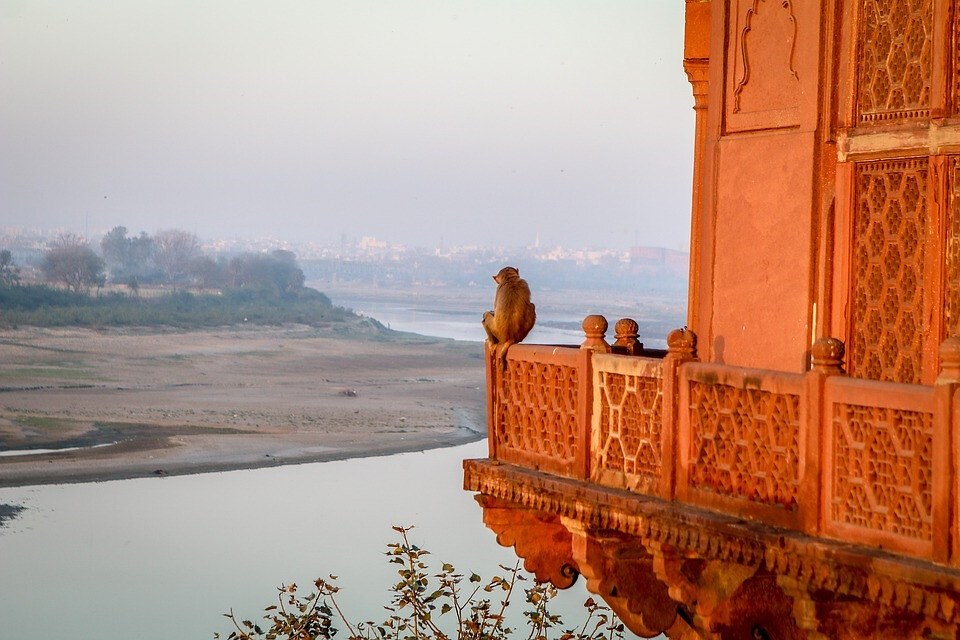
The classic first route, and the most photogenic budget circuit in the world: Jaipur, Jodhpur, Udaipur, Pushkar, Jaisalmer. Fort entries run $3–7, a camel safari with a night under desert stars costs $20–30 all-inclusive, and rooftop dinners overlooking lake palaces cost $3. Trains link every city for a few dollars, and the overnight legs double as free accommodation. Base yourself by Udaipur's lake, where a $12 room comes with a view that would cost $200 in Venice.
A workable loop from Delhi: Jaipur two nights, Pushkar two, Jodhpur two, Jaisalmer two plus the desert night, Udaipur three — every leg $3–8 by rail or bus. In Jaipur, the $7 composite ticket covers Amber Fort and four more sights across two days. Book Jaisalmer's camel safari through your guesthouse rather than the station touts; the honest $25 version includes dinner, blankets, and sunrise chai in the dunes.
Kerala: backwaters and beaches
India's laid-back south trades chaos for coconut palms. Skip the $150 private houseboat and take the public ferry through the same Alleppey backwaters for $0.50–1, sleep in $10–15 homestays among the rice paddies, and eat banana-leaf fish thalis for $1.50–2.50. Varkala's clifftop beach scene runs a few dollars more but stays comfortably under $25 a day, and an hour-long ayurvedic massage — a $150 spa treatment back home — costs $8–12 here.
Alleppey logistics: the public ferry toward Kottayam leaves from the jetty near the bus stand and spends hours in the same canals the $150 houseboats cruise — sit on the shaded side. Fort Kochi makes the gentlest base in the state: $12 homestays, the Chinese fishing nets at sunset for free, and $3 Kathakali dance performances in the evening. For lunch, follow your homestay host to a toddy shop, where palm wine and fiery fish curry run $2–3.
Himachal: the Himalayan north
In the mountains your money goes furthest of all. Guesthouses in Manali's old town or McLeod Ganj cost $5–10, momos and thukpa noodle soup run $1–2, and day hikes to waterfalls and temples are free. Buses wind up from Delhi for $8–15. Many travelers arrive for a week and stay a month — at $15 a day, why not?
Getting up is the initiation: overnight Volvo buses from Delhi run $12–15 to Manali or McLeod Ganj and arrive with the sunrise. Base in Old Manali or Vashisht rather than the main bazaar — quieter, cheaper, closer to the trailheads — and in McLeod Ganj add the Dalai Lama's temple complex (free), $1 momo plates, and $3 drop-in yoga classes that explain why arrivals so outnumber departures.
The monthly total
A month in India at $20 a day is $600 — add $50–100 for splurges (the Taj Mahal is $13, a yoga class $3–5, a cooking course $10) and a 30-day trip lands at $650–700 on the ground. That's less than a week costs in most of Europe. Solo travelers who want more comfort can double everything to $40 a day and travel in genuine style. For the day-to-day tactics that keep any trip this cheap, our guide to traveling on $30 a day pairs perfectly with India.
Shorter trips bend the same math: two focused weeks in Rajasthan run $300–350 on the ground, ten days in Kerala about $250. Flights are the wildcard — IndiGo hops cost $30–60 booked two weeks out, and one strategic flight, say Udaipur to Kochi, buys back two full travel days for the price of a night's guesthouse and a train ticket combined.
Best time to visit India
The golden window for the classic circuits is October to March: dry skies, 70–85°F days across Rajasthan and the plains, comfortable nights. December and January turn Delhi's mornings foggy and northern nights genuinely cold — pack a layer — while that same stretch is peak perfection in Kerala and Goa. April to June is the furnace: 110°F in Rajasthan, when even locals surrender, and exactly when the Himalayas open up — Himachal and Ladakh are at their best June to September while the plains melt. The monsoon, June to September, drenches most of the country but has its own budget logic: Kerala turns luminous green, room prices fall 30–50 percent, and an Udaipur lake-view room can drop to $8. One calendar note to plan around rather than away from: festivals. Diwali (October or November) and Holi (March) are unforgettable, but transport sells out a week ahead and guesthouse prices in hotspots like Pushkar and Varanasi can double — book those legs early instead of skipping them.
Is India safe for budget travelers?
Millions travel India cheaply and safely every year, and the crime that actually touches tourists is overwhelmingly petty: inflated prices, commission games, the occasional bag lift on a crowded platform. The practical rules: chain your bag on overnight trains (a $1 bike lock through the strap and the luggage loop under the bunk ends the worry), keep your phone away from the road edge in cities, and treat any stranger steering you to a "better" hotel or a "government tourist office" as a commission agent — the real offices don't recruit at stations. Health is the more common holiday-wrecker: drink filtered or bottled water, ease into street food over your first few days, and carry oral rehydration salts, about 25 cents a sachet at any pharmacy. Solo women do travel India — many repeatedly and joyfully — but it demands more armor than Thailand or Vietnam: dress conservatively, prefer AC train classes and daytime arrivals, book women-only dorms where Zostel offers them, and read our solo female safety guide first. India rewards confidence and punishes autopilot; stay switched on and it repays you tenfold.
Common first-timer mistakes
- Cramming six cities into two weeks. Indian distances deceive; a "short hop" is often a 12-hour ride. Three bases beat six blurs — and slow is both cheaper and saner here.
- Not booking trains early. Popular routes sell out days or weeks ahead. Book on IRCTC as soon as your dates firm up, and learn the foreign-tourist quota and Tatkal last-minute release for rescue tickets.
- Landing at midnight with no pickup arranged. Arriving exhausted into the 1am rickshaw scrum is how a $3 ride becomes $20. Every major airport has prepaid taxi counters and Uber — use them.
- Treating the first quoted price as real. Applies to rickshaws, souvenirs, and "last available" rooms alike. Cheerful, patient haggling is the culture, not an insult.
- Skipping travel insurance to save $40. A clinic visit in India is cheap; an evacuation is not. Insurance is the one line where trimming the budget is a false economy.
What to pack for India
The short list that earns its space:
- Modest, breathable clothes — loose cotton covering shoulders and knees works for temples, trains, and sun alike. Then buy more there: a market kurta is $3–5 and better suited to the heat than anything you brought.
- A water filter bottle ($35–45) — it pays for itself inside three weeks and spares a hundred plastic bottles.
- Tissues and hand sanitizer — hotels have supplies; the places between them may not.
- Sandals plus one closed pair; you'll remove footwear at every temple, so slip-ons win the trip.
- A sleep liner for sleeper trains ($8–12 online), earplugs, and a padlock for guesthouse doors that latch.
Anything forgettable is replaceable within one bazaar visit, usually for a dollar or two — the full method lives in our packing list.